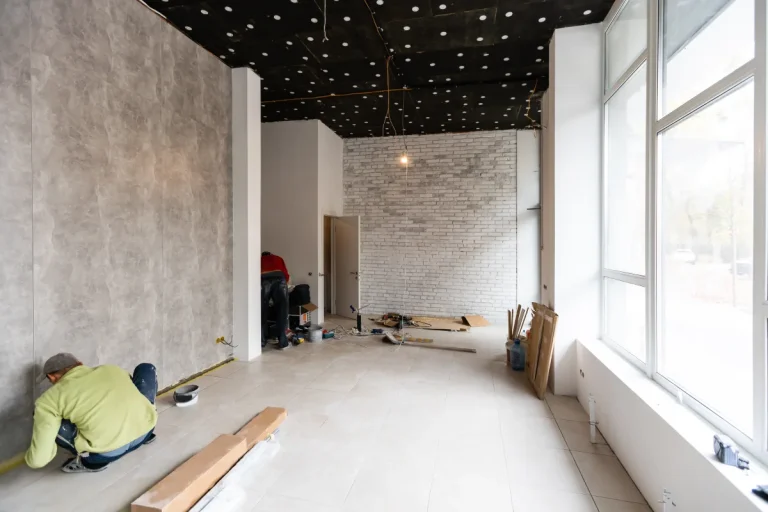
Office Fit-Out vs Office Renovation in Malaysia: What’s the Difference?
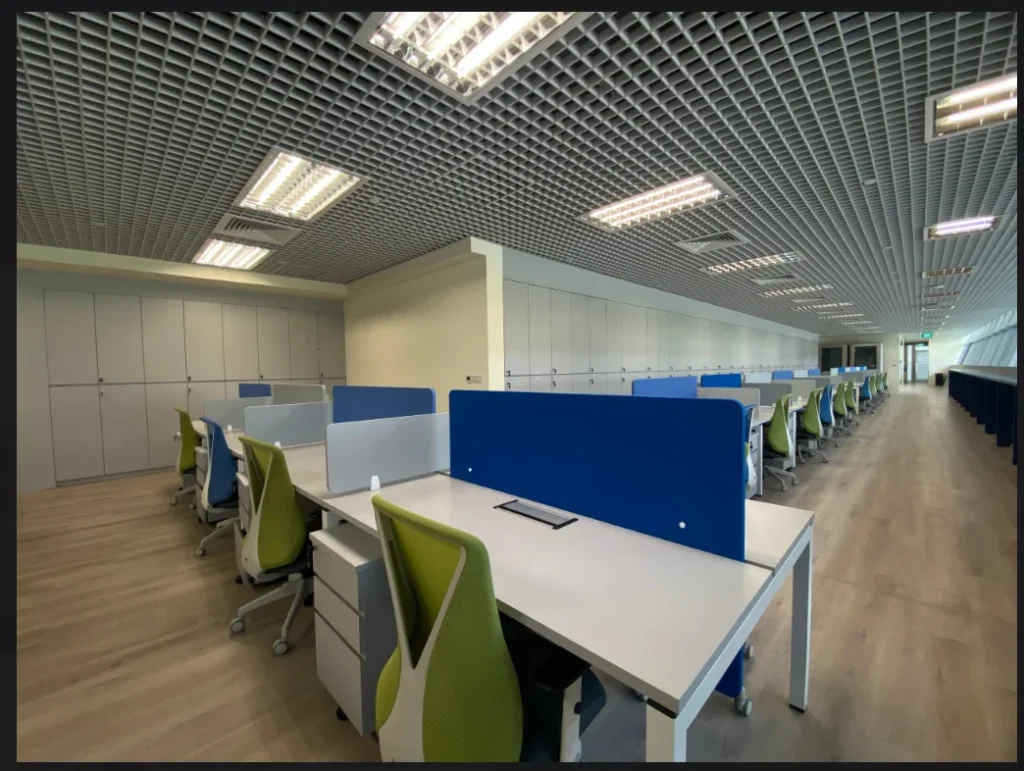
In Malaysia’s dynamic market, creating an optimal work environment is essential for attracting and retaining talent. According to a 2023 report by Knight Frank Malaysia, the office sector is experiencing a “flight to quality,” with tenants prioritising well-designed, ESG-compliant, and employee-centric spaces.
This trend drives two primary solutions: an office fit-out, which transforms an empty shell into a purpose-built workspace, or a renovation, which modernises an existing space to meet current employee needs.
While both are effective, they involve distinct processes, costs, and timelines. This article will break down these key differences to help you make the most informed decision for your business.
Key Takeaways
- A fit-out builds a brand-new, bespoke office from a bare shell. A renovation updates your existing space for modern needs and functionality.
- Landlords typically provide the basic “Category A” shell. Your business funds the “Category B” custom fit-out, which includes walls, furniture, and branding.
- Interior office fit-outs are a larger investment (RM150+ psf) with longer timelines. Renovations are faster and more budget-flexible, making them ideal for targeted upgrades.
- A major fit-out benefit is that many costs can qualify for Capital Allowances under Malaysian tax law, offering a significant financial incentive.
What is an Office Fit-Out?
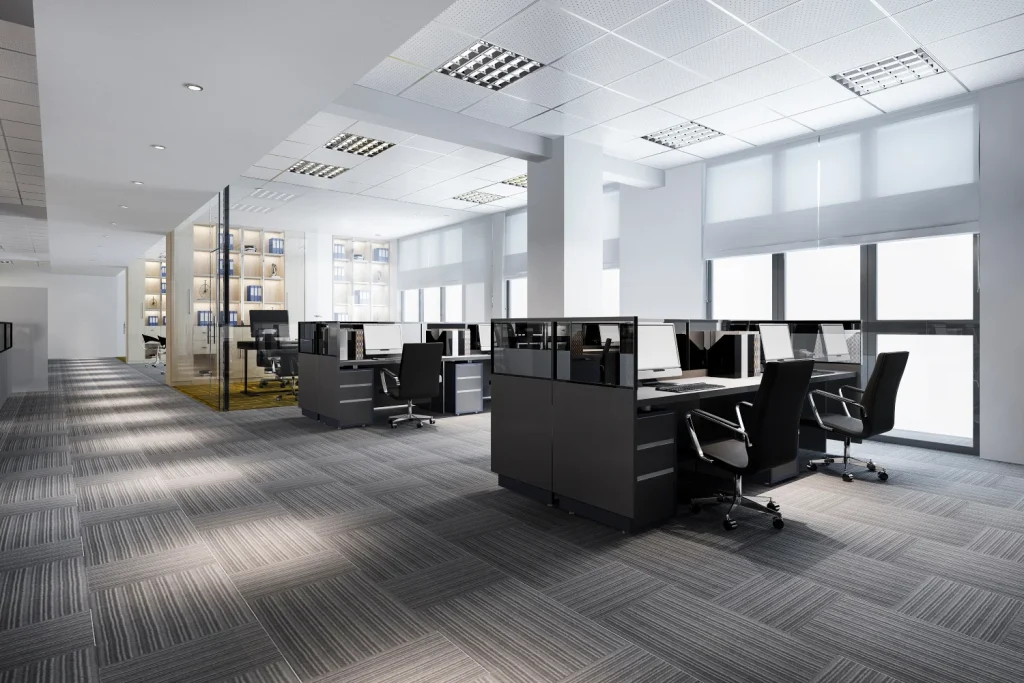
The term ‘fit out’ refers to the process of designing and constructing a usable interior space from a bare structural shell. For businesses in Malaysia, this means transforming an empty commercial unit into a functional, efficient, and tailored workspace that aligns with specific operational needs and corporate culture.
Office fit-outs are essential for creating a workspace that not only meets immediate logistical requirements but also measurably enhances employee productivity and satisfaction. A well-executed fit-out, tailored to the business’s needs, can significantly improve workflow and operational efficiency.
In fact, the Gensler U.S. Workplace Survey 2022 found that the most effective workplaces provided a great experience, which was a key driver of employee performance, innovation, and job satisfaction. This principle applies directly to the Malaysian corporate landscape.
There are two main categories of office fit-outs: Category A and Category B, each serving a unique purpose in the overall office design process.
Category A Fit-Out
A Category A fit-out, often provided by the landlord or developer of a new commercial building, primarily involves installing the essential infrastructure to make the space ready for a tenant’s final customisation. This foundational stage includes setting up basic M&E (Mechanical & Electrical) elements such as:
- Lighting systems
- Air conditioning
- Suspended ceilings
- Raised floors
- Other core fit components
Essentially, it creates a blank canvas upon which businesses and companies can build their unique office environment. This phase ensures the core structure is functional, providing a safe and habitable space for the next stage of construction, often incorporating features like ample natural light, which is a key aspect of fostering creativity.
The focus here is on making the space functional and ready for further customisation. This first step transforms an empty office space into a base for a productive work environment. Once the Category A office fit-out is completed, businesses can then proceed to the more personalised aspects of their office design in the Category B phase.
Category B Fit-Out
A Category B fit-out takes the process a step further by preparing the office space to be fully functional, branded, and aesthetically appealing for the occupying company. After the essential infrastructure from Category A is in place, Category B focuses on adding the finishing touches that align with the business’s specific operational needs and branding. This includes the following:
- installation of office furniture
- creation of partitions for meeting rooms and private offices
- installation of specialised IT and AV equipment
- application of branded graphics and colour schemes
- setting up of kitchenettes and breakout areas.
The goal is to create a workspace that is not only functional but also visually appealing and conducive to employee productivity. By addressing both aesthetics and functionality through elements like biophilic design (incorporating natural elements) or activity-based working zones, a Category B fit-out directly supports a company’s overall business objectives and talent retention strategies.
What is Office Renovation?
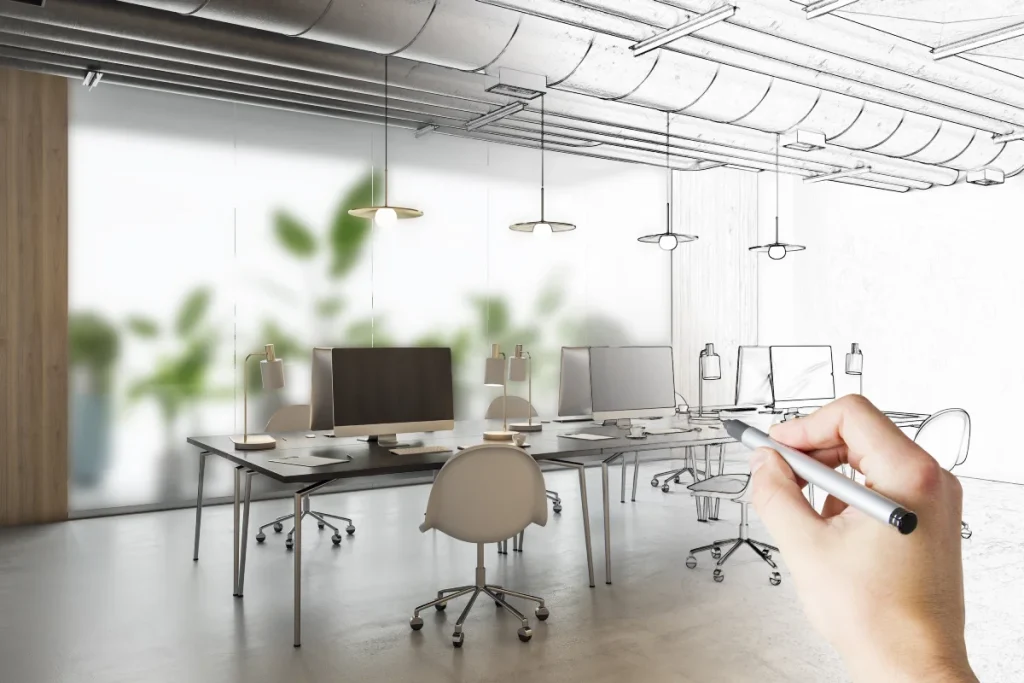
Office renovation, sometimes referred to as refurbishment, involves repairing, upgrading, and reconfiguring existing workspaces to improve functionality and aesthetics.
Unlike fit-outs, which often start with a blank canvas, renovations focus on updating existing structures to meet current business needs and modern standards. This is a common choice for businesses in established office buildings across Kuala Lumpur, Penang, and Johor Bahru that want to modernise without relocating.
The renovation process can address common issues such as peeling paint, worn-out flooring, outdated lighting, and inefficient layouts, ensuring that the office’s appearance remains professional and motivating.
As businesses adapt to post-pandemic work models, many are renovating to create more collaborative spaces and integrated technology. Reconfiguring layouts and enhancing the workspace allows renovations to align the office design with the company’s evolving business goals and operational requirements, such as achieving a Green Building Index (GBI) certification to improve sustainability credentials.
Common Renovation Activities
Renovation activities aim to update and improve existing office environments. This often involves space redesign, architectural adjustments, and installing modern furnishings to enhance the overall functionality and appeal of the office.
In Malaysia, key upgrades during renovations frequently include enhancing lighting systems to energy-efficient LEDs and improving HVAC (Heating, Ventilation, and Air Conditioning) systems to comply with national plans for better energy efficiency and air quality.
Renovations can also involve significant structural changes, such as removing non-load-bearing walls to create open-plan spaces, upgrading old electrical and plumbing systems to meet current Suruhanjaya Tenaga (Energy Commission) standards, or improving acoustics. These activities not only modernise the office but also ensure that it meets current safety, accessibility, and efficiency standards, contributing to a better work environment and potentially lower operational costs.
Key Differences Between Office Fit-Out and Office Renovation
While both office fit-outs and renovations aim to improve office spaces, they serve different purposes and involve distinct processes.
A fit-out is about transforming an empty space into a functional and efficient workspace by installing all necessary infrastructure and aesthetic elements from scratch. It is fundamentally about creation. On the other hand, a renovation focuses on updating and improving an existing space to meet current needs. It is fundamentally about transformation.
To make the comparison clearer, here is a detailed breakdown of the key differences in a table format:
| Aspect | Office Fit-Out | Office Renovation |
| Fundamental Concept | Creation Building a new, usable workspace from a bare or empty shell. |
Transformation Updating, reconfiguring, and improving an existing, operational workspace. |
| Scope & Objectives | Comprehensive & Bespoke
|
Targeted & Adaptive
|
| Cost & Budget | Higher & Predictable
|
Lower & More Variable
|
| Timeline & Scheduling | Longer & More Complex
|
Faster & More Flexible
|
This table summarises that the choice hinges on whether a business needs to create a new environment from the ground up or transform an existing one to meet new goals and overcome current challenges.
Benefits of Office Fit-Outs
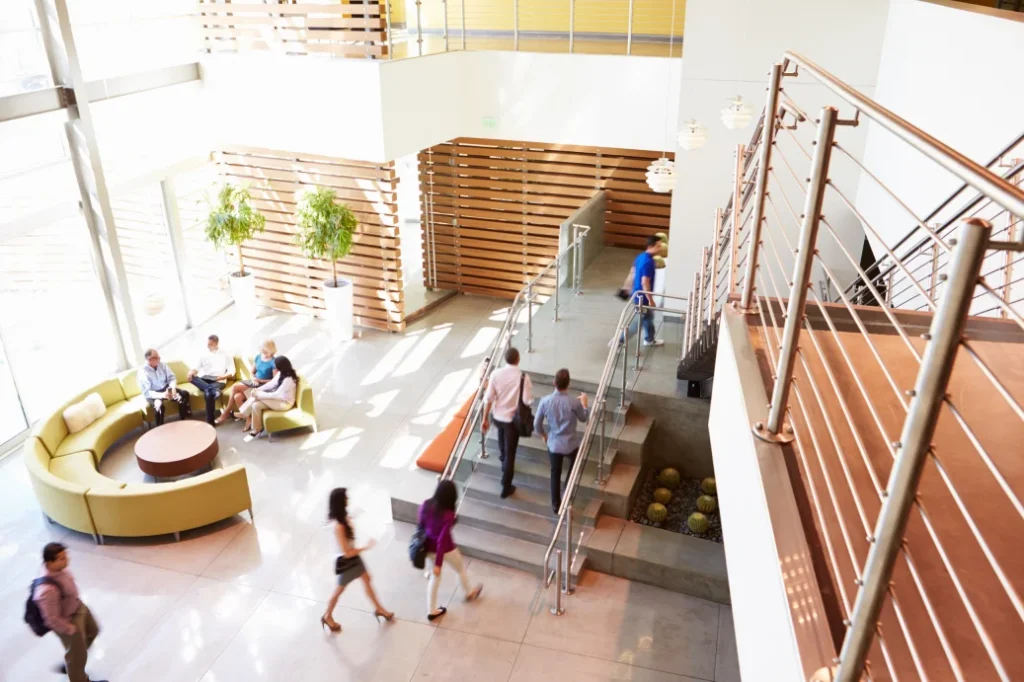
Custom office fit-outs allow businesses to create a workspace that perfectly mirrors their brand identity and accommodates their unique workflow needs. A survey conducted by the Leesman Index, which benchmarks workplace effectiveness, revealed that employees who are most satisfied with their workplace are also more likely to feel proud to work for their company.
A strategic office fit-out delivers a wide range of benefits, including:
- Enhanced Brand Identity: Creates a physical space that reflects your company’s values, culture, and professional image.
- Improved Employee Satisfaction & Performance: A well-designed, functional, and comfortable environment boosts morale, pride, and productivity.
- Increased Operational Efficiency: A layout tailored to your specific workflow can eliminate bottlenecks and improve daily processes.
- Future-Proof Investment: Incorporating adaptable elements like modular furniture and flexible spaces ensures the office can evolve with your business, reducing future renovation costs.
By responding to growth and changing operational requirements with features like modular furniture and flexible partitions, a fit-out can enhance space efficiency and future-proof the investment.
Advantages of Office Renovations

Office renovations offer a strategic way to modernise a workspace and align it with a company’s evolving needs. The primary benefits include:
- Boosted Employee Morale and Productivity: Creating a modern and inspiring environment energises employees, improves morale, and can directly lead to increased productivity and engagement.
- Enhanced Collaboration and Innovation: By reconfiguring the layout to include more collaborative areas like breakout spaces or huddle rooms, renovations can significantly improve teamwork, communication, and creative problem-solving.
- Strengthened Brand Image: An updated, professional office space elevates client perceptions and reinforces the company’s brand, signalling that the business is successful, current, and invested in its future.
- Financially Pragmatic Approach: Renovations can be implemented in phases, allowing businesses, especially SMEs, to make continuous improvements to their workspace without the large upfront capital investment of a full fit-out.
In essence, a well-planned renovation acts as a strategic lever for growth. It moves beyond a simple facelift to directly address operational inefficiencies and cultural needs.
Choosing the Right Option for Your Business
The decision between a fit-out and a renovation is influenced by your project goals, the structural condition of the space, specific client needs, and your overall budget. It is crucial to consider the company’s growth plans over the next five to ten years and evaluate how either option can support these long-term goals.
Is it an interior fit-out?
In Malaysia, businesses often prefer office fit-outs for potential tax benefits. Under the Malaysian Income Tax Act 1967, certain expenditures on plant and machinery, which can include items like partitions, furniture, and air-conditioning systems in a fit-out, may qualify for Capital Allowances, allowing the business to claim deductions against its taxable income. However, operational requirements in specific industries, like finance and healthcare, usually dictate the need for specialized fit-outs that meet stringent regulatory standards.
Or is it a renovation?
On the other hand, a renovation is often the more pragmatic choice when the existing workspace has a solid foundation. Suppose the core layout functions well but the environment requires a modern update to enhance brand image or boost employee morale. In that case, a renovation offers targeted improvements without the extensive costs and operational downtime associated with a full fit-out.
This approach is particularly suitable for businesses operating within a tighter budget, those in leased premises with renovation restrictions, or companies that need to remain fully operational throughout the upgrade process.
Your Choice
The best choice depends on which best aligns with your unique business circumstances. A fit-out is an investment in a completely new vision, while a renovation is a strategic enhancement of your current assets, perfect for refreshing your culture and brand more cost-effectively.
A clear assessment of your operational needs, financial position, and future ambitions will determine the most effective path for your company.
Cost Considerations: Office Fit-Out vs. Office Renovation
Based on our experience at Legend Interiors, the expense of an office fit-out in Malaysia is different from the total cost of an office renovation or renovation. Here’s a comparison:
Office Fit-Out vs. Office Renovation: A Cost Comparison
| Feature | Office Fit-Out | Office Renovation / Refurbishment |
| Typical Cost Range | RM150 to over RM400 per square foot. | Starts as low as RM50 per square foot for minor updates; can approach fit-out costs for major projects. |
| Scope of Work | Installation of new infrastructure, systems, and custom elements in a new or empty space. | Updating an existing space, ranging from minor cosmetic changes to a full strip-out and major reconfiguration. |
| Initial Investment | Generally higher; considered a capital-intensive project. | Varies significantly with the project’s scale; it can be a lower initial investment for smaller updates. |
| Key Cost Advantage | A fully customised space tailored to specific needs (though at a higher initial cost). | It can be more cost-effective by reusing existing features like flooring or ceilings, which is also more sustainable. |
Ultimately, the choice depends on your primary goal. A fit-out is the ideal solution for creating a completely new, bespoke workspace from a blank slate, justifying its higher initial investment. A renovation, however, offers a more flexible and potentially cost-effective path to modernising an existing space, especially when budget and sustainability are key considerations.
Working with Professional Contractors in Malaysia
Hiring experienced contractors for office projects in Malaysia is crucial for ensuring efficient execution, compliance with local regulations, and high-quality outcomes. A professional project manager can further enhance success by offering expert guidance and helping create a workspace that attracts top talent.
An ideal contractor should:
- Ensure Project Success and Regulatory Compliance: Partnering with an experienced professional is non-negotiable for ensuring your office project in Malaysia is executed efficiently and adheres to all local regulations and building codes. A skilled contractor, often guided by a project manager, is crucial for maintaining high standards and creating a quality workspace that can help attract and retain top talent.
- Demonstrate Proven Expertise and Project Management Skills: Possess a strong portfolio of commercial office projects, with the capability to operate in active business environments while minimising disruption. They should be able to develop and adhere to strict timelines and budgets, and act as a single, reliable point of contact for all stakeholders throughout the project.
- Uphold Professional Credentials and Compliance: Hold all relevant licenses, insurance, and credible client references. Most importantly for projects in Malaysia, be registered with the Construction Industry Development Board (CIDB) — a key indicator of legitimacy, professionalism, and compliance with national industry standards.
Verifying contractors’ licenses, insurance, and references is essential in choosing the right team for office renovations.
Make the Right Choice for Your Office Interior Fit-Out
The decision between an office fit-out and a renovation is a pivotal one for any Malaysian business. A fit-out offers the power of complete creation, allowing you to build a bespoke workspace from a bare shell that perfectly aligns with your brand, workflow, and long-term vision. A renovation, conversely, is a strategic transformation, modernising and enhancing your existing space to boost efficiency and morale with minimal disruption.
The right path depends on your specific goals, the condition of your space, your budget, and your projected timeline. By carefully weighing these factors, you can invest wisely in a workspace that not only meets today’s needs but also drives future growth and success.
Feeling unsure which path is right for your company? Let our experts help you navigate the complexities of office design in Malaysia. Contact Legend Interiors today for a consultation, and let’s start building the future of your workspace together.
FAQs About Office Designs in Malaysia
Do I need permits for an office renovation in Malaysia?
Yes, most office renovations in Malaysia require permits, especially if they involve structural changes, modifications to M&E (Mechanical & Electrical) systems, or fire safety systems. Minor cosmetic updates like painting may not require approval, but it is always best to consult with your contractor and the local council to ensure full compliance before starting any work.
What are the current office design trends in Malaysia for 2025 and beyond?
The key trends focus on creating flexible and human-centric workspaces to support modern work styles. This includes:
- Hybrid Work Models: Designing spaces with a mix of collaborative zones, quiet focus pods, and hot-desking options.
- Biophilic Design: Integrating natural elements like plants, wood, and natural light to improve employee well-being and productivity.
- Smart Technology: Incorporating integrated AV systems, room booking software, and seamless connectivity for a frictionless work experience.
- Sustainability: Using eco-friendly materials and aiming for green certifications like Malaysia’s Green Building Index (GBI).
What is a landlord’s typical responsibility in a new office space fit-out?
A landlord is typically responsible for providing the Category A fit-out. This creates a “blank canvas” for the tenant and includes essential infrastructure like the primary M&E services, fire protection systems, suspended ceilings, and raised floors. The tenant is then responsible for the Category B fit-out, which includes all partitions, furniture, branding, and final finishes to make the space their own.
How can I make my office fit-out or renovation more sustainable?
You can significantly improve sustainability by focusing on several key areas. Prioritise using recycled or locally sourced materials, install energy-efficient LED lighting and HVAC systems, maximise natural light to reduce electricity consumption, and choose low-VOC (Volatile Organic Compound) paints and finishes. Working with a contractor experienced in Green Building Index (GBI) standards can also help guide these decisions effectively.