How to Minimise Downtime in a Thailand Office Renovation
For a 2,000 sqm Bangkok office, every day of fit-out delay quietly burns through more than THB 60,000 in idle rent alone, before a single hour of lost productivity is counted. With Grade A rents averaging THB 943 per square metre per month and Bangkok’s fit-out costs ranking third highest in Southeast Asia, downtime is the single largest hidden cost most country managers never see coming.
The good news: most of it is preventable. Almost every week lost on a Bangkok fit-out traces back to one of five decisions: how scope is locked, when approvals are filed, how procurement is sequenced, which construction model is chosen, and who is contracted to deliver the whole thing. In this guide, we’ll walk you through all five and what to do differently on each.
For nearly four decades, we at Legend Interiors have built our name as an office renovation company helping global brands across Asia open offices, stores and showrooms on schedule. Below is the playbook we use on every Bangkok project: what to ask for at the tender stage, where the time gets lost, and how to protect a handover date that’s already on the calendar.
1. Freeze Scope and Appoint One Decision-Maker by Week 10
One mid-build design change in a Bangkok fit-out takes 7 to 14 days. Two changes absorb a month. The fix is governance, set before tender close. An experienced office renovation company will write the scope freeze into the tender.
- Lock the scope freeze date at week 10: Write it into the tender. Any change after this date routes through a formal variation with a cost and time impact attached.
- Name one client-side decision-maker: Operations director or country manager. Not property. Not legal. One name, one weekly site walk, one fortnightly review.
- Complete the pre-construction site survey: Four items decide whether the design can be built as drawn:
- Riser capacity: The spare room in the building’s vertical shafts for your additional power, data, and water lines.
- Slab loading: The weight the floor is rated to carry, including your equipment, stock, and heavy fixtures.
-
- Chilled-water tie-in: The connection point to the building’s central cooling system, where available.
-
- Ceiling void clearance: The available depth above the ceiling for ductwork, sprinklers, and lighting.
Catching these in week 10 costs a survey fee. Catching them in week 2 of construction costs three weeks from the handover date.
2. File BMA and Landlord Approvals in Parallel
Many contractors in Bangkok file BMA permits only after receiving landlord approval. The sequence adds three to four weeks to every fit-out. We file them in parallel, the single biggest time-saver available for a Bangkok project.
- Submit BMA and landlord packages on the same day: Both authorities review independently. Sequencing them is a habit, not a requirement.
- Lock the building charter before the tender closes: At Park Ventures, One Bangkok, EmSphere, and similar Grade A stock, the following must be agreed in writing before mobilisation:
- Lift bookings and goods-lift access windows
- Noise hours and after-hours premium rates
- Material delivery routing and staging zones
- Hot-works permits and fire-watch protocols
3. Open the Procurement Runway 8 to 12 Weeks Before Site Start
Imported millwork is the most common mid-build stall on a Thai fit-out. Lead times from Dongguan, Vietnam, and Europe run eight to twelve weeks before container arrival. Orders placed at construction start are already late.
When imports carry baht-volatility exposure, or the calendar is tight, locally fabricated joinery removes the lead-time variable entirely. This is standard practice for any experienced commercial interior contractor operating across Thailand.
- Place imported millwork orders at design freeze: Procurement runs in parallel with site preparation, absorbing the entire lead time.
- Overlay the Thai calendar on the procurement programme: Three windows are non-negotiable:
- Songkran in mid-April removes one full project week
- Royal events and public holiday clusters
- December trade shutdowns stall Q1 handovers by four to six weeks
- Use in-house or partner-fabricated millwork as a buffer: When imports carry baht-volatility exposure, or the calendar is tight, locally fabricated joinery removes the lead-time variable entirely. On our Bangkok projects, we route critical millwork through our own 500,000 sq ft Dongguan facility specifically to protect the schedule against this lead-time risk, with production planned around the Bangkok site programme rather than against it.
4. Match the Construction Model to the Cost of a Lost Operating Day
The right construction model for your business is the one that matches the cost of a lost operating day. In our experience across offices, retail, and showroom projects in Bangkok, four models tend to fit four different operating situations. The figures below reflect the ranges we typically see on our own projects as a starting point for comparison.
Below are four models for four use cases:
| Strategy | For | Downtime Saved | Cost Impact |
|---|---|---|---|
| Single full shutdown | Offices under 50 staff | 0 days | Lowest |
| 3-zone rotation | 50 to 250 staff | 70% – 90% | 8% – 12% |
| Swing-space bridge | 250+ staff, client-facing | Approximately 100% | 15% – 20% |
| Weekend-compressed finish | Retail, showrooms | Approximately 95% | 5% – 10% |
The choice between these four comes down to one number: what a day of lost operations actually costs the business.
- For a smaller office where most work can be done remotely for a week, a single shutdown is almost always the most efficient option.
- For a 200-person team where productivity loss compounds quickly, a 3-zone rotation usually pays for itself within the build.
- Client-facing operations, where a closed front door damages revenue and brand perception in the same week, are the point at which swing-space arrangements stop looking expensive.
- For retail and showrooms, the maths almost always favours weekend-compressed work, because the trading hours saved outweigh the premium on after-hours labour.
5. Appoint an Office Renovation Company with a Single-Interface Critical Path Control
Coordinating design, GC, millwork, M&E, and FF&E as separate contracts is where most weeks get lost on a Bangkok fit-out. Every interface between trades is another point where the schedule can slip, and on a tight Bangkok programme, those interfaces add up fast. This is exactly what our single-interface model is built to remove.
On every Bangkok project we deliver, the tender we issue includes:
- A BMA contingency line for permit revisions and resubmissions
- Lift-booking allowances and goods-lift access windows
- After-hours premium loading for buildings that restrict construction to overnight hours
- A week-by-week critical path with float disclosed
That gives the client a programme they can hold us to, not a generic schedule that quietly slips.
Behind the tender is our 500,000+ sq ft APAC production facility in Dongguan. Imported millwork is the most common cause of mid-build stalls on Thai fit-outs, and our own factory absorbs that lead-time risk before it ever reaches the site:
- Critical millwork enters production at design freeze, not at site mobilisation
- QC happens at our factory, before anything ships
- When a third-party supplier delays, our in-house joinery covers the gap
- Baht volatility exposure is reduced because fewer line items depend on imports
The same discipline applies to every multi-country rollout we deliver for H&M, Aesop, Audi, Swarovski, and Victoria’s Secret. The programme controlling demand for those brands is the same control that protects a corporate office handover date in Bangkok.
Schedule Risk Costs More Than Build Price in Bangkok Fit-Outs
Construction costs in a Bangkok fit-out are locked in at contract signing. Schedule cost tends to compound from the moment the programme slips. For a 250-staff office, a two-week handover delay routinely costs more than the entire margin between the cheapest and the most capable contractor on the tender list.
Office fit-out cost per sqm is the figure most procurement teams scrutinise. It is also the figure that conceals the larger risk where every day past handover carries a fully loaded operating cost that the tender document never shows.
Regional benchmarks do not account for three local factors that compress the Thai fit-out window:
- BMA approval cycles for MEP and fire re-certification are less predictable than those of the Singapore BCA or the Hong Kong Buildings Department.
- Songkran removes a full project week every April. Sites that do not have pre-stage materials lose ten to twelve calendar days.
- Year-end trade shutdowns stall Q1 handovers by four to six weeks if critical path works are not closed before December.
Working with an Office Renovation Company Built for Programme Control
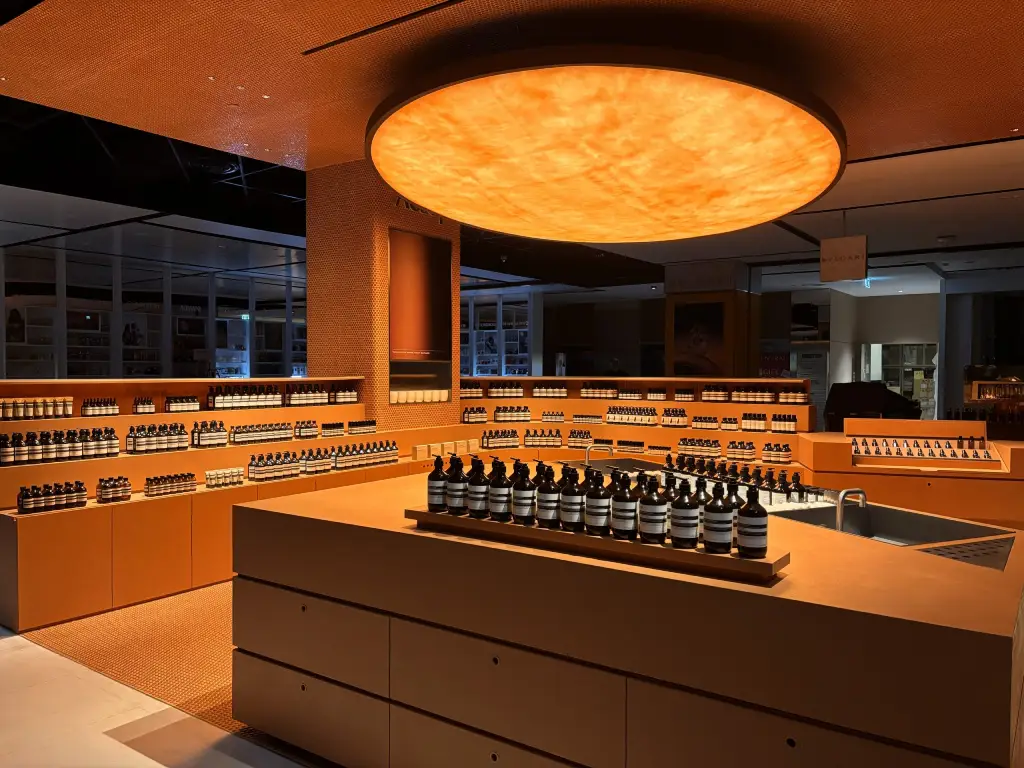
Since 1988, Legend Interiors has delivered turnkey commercial fit-outs from 10 offices across APAC for clients including H&M, Aesop, Audi, Swarovski, and Victoria’s Secret, applying the same programme discipline to every Bangkok project. We ensure every project is handled by a single director who oversees design, BMA liaison, landlord approvals, millwork, and FF&E, supported by 500,000+ sqft of owned APAC factory space that absorbs imported lead-time risk before it reaches the site.
Request an audit from the office renovation company trusted by global brands across APAC.
Frequently Asked Questions
How long does a commercial fit-out take in Bangkok?
A standard Bangkok commercial fit-out runs 12 to 16 weeks from site mobilisation, with an additional 8 to 12 weeks of pre-construction governance, approvals, and procurement required to hit that timeline.
What causes downtime during a commercial fit-out project in Thailand?
Downtime on a Thai fit-out is caused by five recurring factors: late BMA permits, sequential landlord approvals, imported millwork lead times, Songkran and year-end trade shutdowns, and fragmented subcontractor coordination.
How can a business stay operational during an office fit-out?
A business stays operational during an office fit-out by selecting one of four construction models: a single full shutdown, a 3-zone rotation, a swing-space bridge, or a weekend-compressed finish, matched to headcount and the cost of a lost operating day.
What is the difference between an office renovation company and a general contractor in Thailand?
An office renovation company delivers design, BMA liaison, millwork, M&E, and FF&E under a single accountable interface, whereas a general contractor coordinates separately appointed trades and typically does not own fabrication capacity.
When should imported millwork be ordered for a Bangkok fit-out?
Imported millwork should be ordered at design freeze, 8 to 12 weeks before site mobilisation, so procurement runs in parallel with site preparation and absorbs the entire lead time.