Fit-Out Contractor Costs in Thailand: Budgeting for SMEs
For many small and medium-sized enterprises (SMEs) in Thailand, setting up a functional and well-designed workspace is a key investment — but one that can quickly spiral without proper planning. Fit-out projects involve more than just furniture and paint. Commercial interior fit-out projects require careful coordination between architects, engineers, and your interior fit-out contractor to ensure efficiency, compliance, and long-term performance.
At Legend Interiors, we’ve worked with numerous SMEs across Thailand who underestimated their budgets due to hidden costs like compliance, permits, and MEP (mechanical, electrical, and plumbing) works. This guide will help you understand how to budget effectively for your fit-out project, what costs to expect, and how to choose a reliable contractor while staying compliant with Thai building regulations.
Key Takeaways
- Fit-out costs in Thailand range from ฿20,000 to ฿45,000 per square metre, depending on finish, complexity, and location.
- Design, compliance, and MEP systems often add 20–30% to your initial construction budget.
- Early planning and accurate design documentation can save up to 15% in rework and delays.
- Setting aside a contingency fund (10–20%) protects SMEs from unforeseen expenses.
- Working with a trusted interior fit-out contractor with commercial project expertise ensures cost transparency, quality assurance, and compliance across office, retail, and hospitality spaces.
Understanding Fit-Out Costs for SMEs in Thailand
Fit-out costs depend on your project’s scope, location, design complexity, and materials. A fit-out may include everything from ceiling grids and partitions to HVAC, fire systems, and loose furniture. While cost structures vary slightly between office, retail, and hospitality projects, the core budgeting principles for commercial interior fit-out remain consistent.
A typical breakdown for a mid-range office in Bangkok looks like this:
| Cost Category | Typical Range | Key Considerations |
| Design & Planning | 5–10% | Architect, project management, and consultancy fees |
| Construction Works | 40–50% | Structural and partitioning work |
| MEP Systems | 15–25% | Air-conditioning, lighting, plumbing, fire safety |
| Finishes & Furniture | 15–20% | Flooring, walls, ceilings, built-ins |
| Compliance & Permits | 3–5% | Building approvals and inspections |
| Contingency | 8–15% | For inflation, delays, or change orders |
Initial Design and Planning: The Often-Overlooked Starting Cost
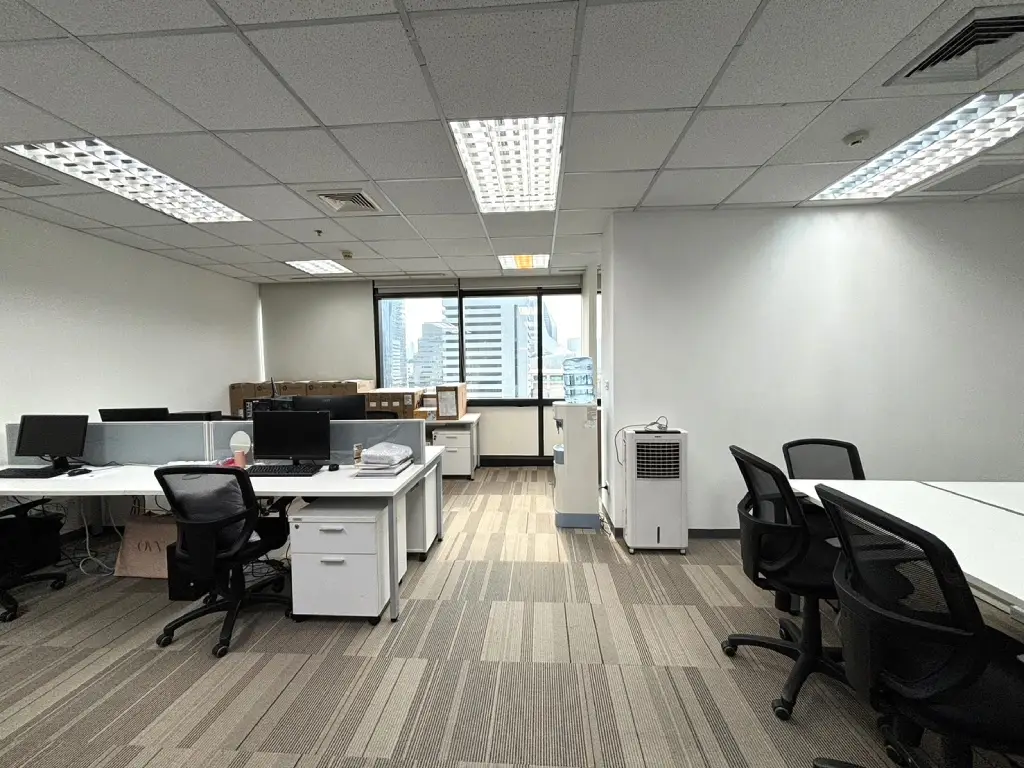
Before construction begins, SMEs must budget for soft costs such as design consultation, architectural drawings, and project management. These expenses typically account for 5–10% of the total fit-out cost.
Working with licensed Thai architects registered under the Association of Siamese Architects (ASA) or the Council of Engineers (COE) ensures that your plans meet national and municipal standards. Investing in professional design early prevents downstream errors that are far more expensive to fix. In commercial interior fit-out projects, early planning also aligns space design with brand identity, customer experience, and operational flow — especially important for retail and hospitality environments.
Companies provide integrated design-and-build solutions — helping SMEs save time by streamlining coordination between design and construction teams, which can shorten overall timelines by 10–15%.
Material and Labour Costs
Material Costs
Material pricing in Thailand fluctuates with demand and import tariffs. Locally sourced materials like engineered wood, ceramic tiles, or gypsum partitions offer cost-effective alternatives to imported stone or glass. SMEs should request samples and confirm material specifications early to avoid price escalation.
Labour Costs
Labour charges depend on skill level and location:
- Skilled trades (carpentry, electrical, MEP) – ฿1,000–฿2,000/day
- General labourers – ฿600–฿900/day
Labour productivity can vary by contractor. Hiring an experienced fit-out contractor with established site supervision helps maintain both quality and speed.
Permits and Compliance Fees
Depending on scope, some office fit-outs may require permits under Thailand’s Building Control Act B.E. 2522. Typical examples include:
| Permit | Authority | Average Fee | Notes |
| Construction/Modification (Aor 1 / Aor 6) | Local Municipality | ฿10,000–฿50,000 | For office or commercial renovation that modifies layout, partitions, or M&E systems |
| Fire Safety Certificate | Fire Authority | ฿5,000–฿15,000 | Required for commercial spaces, especially with occupancy changes or installation of new fire protection fixtures. |
| Health & Safety Compliance | Department of Labour | ฿5,000–฿10,000 | Is needed if occupational hazards increase (e.g., heavy equipment, hazardous materials) |
| Zoning/Usage Permit | Town Planning Dept. | Case-specific | For standard office fit-out, only if usage or density changes. |
(Source: Department of Public Works & Town & Country Planning — dpt.go.th)
If permits are required, allow ~2–8 weeks for straightforward cases; complex scopes or change-of-use can extend to 2–3 months. Proceeding without necessary approvals risks stop-work orders, fines, or remediation under Article 39, with penalties up to ฿60,000.
Budgeting Strategies for Fit-Out Projects
Setting a Realistic Budget
Start by listing all direct and indirect costs — from design fees to delivery charges. Include:
- Furniture and fixtures
- MEP and fire systems
- Access control and IT infrastructure
- Professional and legal fees
Add a 10–20% contingency to address inflation, supply delays, or design revisions. SMEs working with imported goods should consider currency fluctuations when budgeting in Thai Baht.
Cost Control Measures
Implement transparent procurement and strict reporting:
- Obtain at least three competitive bids.
- Ask for a Bill of Quantities (BoQ) with line-by-line pricing.
- Avoid lump-sum contracts with vague exclusions.
- Schedule your project during off-peak months (April–July) for lower labour costs.
Prioritising Essential Features
Distinguish between core functions and decorative extras. Focus funds on:
- Ergonomic lighting and ventilation
- Safety compliance (fire exits, sprinklers, alarms)
- Durable flooring and furniture
A leaner initial fit-out allows you to upgrade aesthetics later without operational disruption.
Selecting the Right Commercial Interior Fit-Out Contractor
Choosing a contractor impacts not just your budget, but also your timeline and final quality.
Evaluating Contractor Proposals
When comparing bids:
- Review portfolios of completed offices or retail fit-outs.
- Request client references and warranty records.
- Assess project management capacity (e.g., in-house MEP engineers).
- Ask for quality assurance standards (ISO 9001, safety training).
Transparency in documentation is crucial — a professional contractor should present schedules, resource plans, and weekly progress reporting.
Negotiating Contracts
Contracts must include:
- Detailed scope of work and specifications
- Payment schedule based on milestones
- Retention (5–10%) and warranty period (usually 12 months)
- Variation and delay clauses
Open-book contracts, often recommended by Legend Interiors, offer full cost visibility and help SMEs understand how labour and materials are allocated.
Ensuring Quality and Reliability
Good contractors conduct internal audits, third-party inspections, and maintain a defect-liability period. Weekly coordination meetings ensure issues are flagged early, preventing cost escalations or rework.
Managing Ongoing and Hidden Fit-Out Costs
Even after handover, costs continue through maintenance, warranties, and energy consumption.
Regular Monitoring & Reporting
Track expenses with digital tools like Asana or Procore. Monthly variance reports comparing “budget vs. actual” spending help maintain accountability and transparency.
Handling Unexpected Costs
Hidden issues like faulty wiring, non-compliant plumbing, or outdated fire systems can surface mid-project. Always require written change order approvals before proceeding with new work.
Post-Completion Maintenance
Engage your fit-out contractor for scheduled maintenance visits. Preventive MEP servicing can reduce long-term repair expenses by 25–30%.
Innovative Fit-Out Solutions for SMEs
Modern fit-outs are evolving with technology and sustainability at their core.
- Modular furniture systems: Enable quick reconfiguration of layouts.
- Virtual Reality (VR) and BIM modelling: Help clients visualise layouts before construction begins.
- Smart lighting and energy sensors: Cut power bills by up to 35%.
- Eco-friendly materials: Bamboo, recycled composites, and low-VOC paints enhance sustainability.
Investing in a Smarter Fit-Out
At Legend Interiors, we understand that budgeting for an office or retail fit-out in Thailand isn’t just about reducing expenses — it’s about maximising value, ensuring compliance, and creating a workspace that’s built for the future.
As a trusted commercial interior fit-out specialist in Thailand, we go beyond standard office renovations. Our team provides end-to-end project management, from design and cost planning to local authority approvals, procurement, and site delivery. With deep knowledge of Thai building regulations and international quality standards, we help SMEs achieve exceptional results without unexpected costs.
If you’re planning your next office, retail, or hospitality fit-out in Thailand, let’s talk. Our design-build approach ensures your space reflects your brand identity, functions seamlessly, and stays within budget — delivering long-term value and lasting impact.
Frequently Asked Questions
What are the main components of fit-out costs for SMEs in Thailand?
They include initial design and planning, construction, MEP systems, furniture and fixtures, and regulatory fees. Each category affects total expenditure and must be considered in your capital forecast.
How can SMEs set a realistic budget for fit-outs?
Define project scope early, secure supplier quotes, and allocate a 10–20% contingency fund for unforeseen costs. Regularly review your budget as the project progresses.
What are effective cost-control measures?
Implement transparent procurement, compare multiple bids, and use milestone-based payments. Monitoring spending monthly ensures financial discipline.
How do flexible workspaces reduce fit-out costs?
They eliminate large upfront investments by providing pre-furnished, serviced environments with shared utilities and maintenance, freeing capital for business operations.
What innovative approaches can help SMEs manage fit-out projects?
Adopting modular furniture, using digital project monitoring tools, and integrating VR design visualisations enable better decisions and fewer costly revisions.