7 Must-Ask Questions for Commercial Interior Contractors
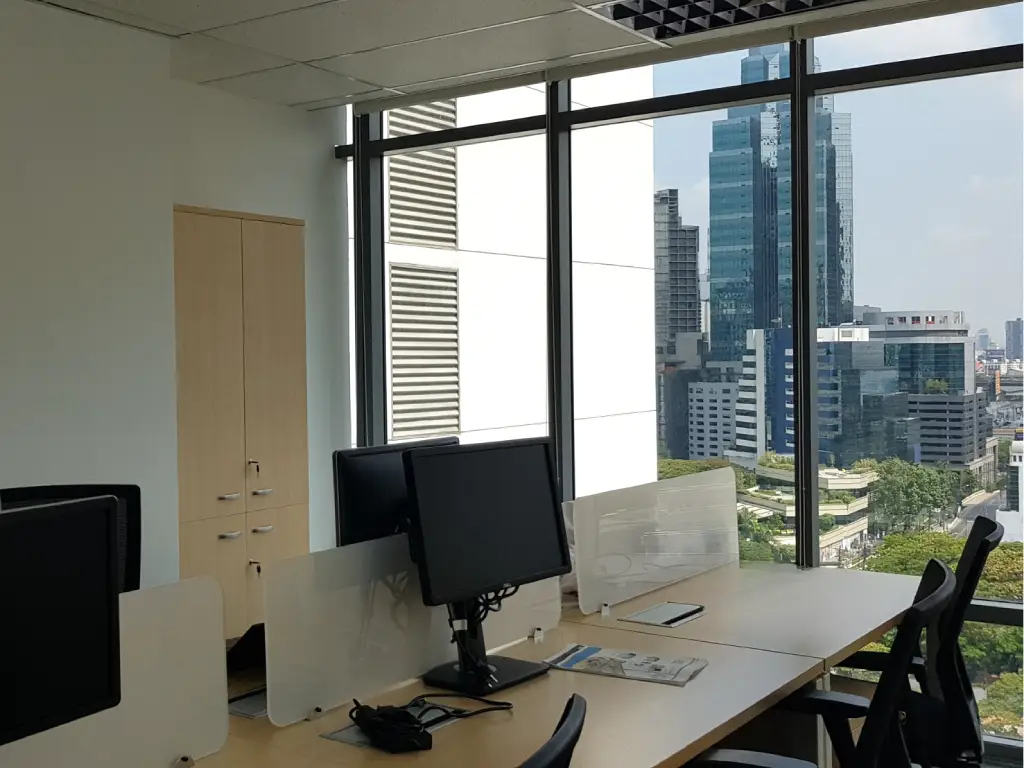
Choosing the right commercial interior contractors can define the success or failure of your renovation. Whether you’re planning an office fit-out, retail upgrade, or hospitality refurbishment, the contractor you hire determines not just how your space looks—but how well it functions, complies with regulations, and supports your business goals.
With extensive experience across Thailand and Asia-Pacific, Legend Interiors understands the critical questions that distinguish reliable commercial interior contractors from those that fall short. Below, we’ve outlined seven must-ask questions to help you evaluate potential partners, avoid costly mistakes, and ensure a seamless, sustainable renovation.
Key Takeaways
- Choose a commercial interior contractor with a proven record in projects similar to yours for confidence in quality and delivery.
- Clear communication, transparency, and flexibility are essential for smooth project management and timely completion.
- Effective cost management and phased implementation prevent overruns while maximising returns on investment.
- Contractors who prioritise sustainability can help you reduce environmental impact and operational costs.
- The right partner ensures minimal disruption to your business operations through strategic planning and proactive coordination.
1. What Experience Do You Have with Commercial Interior Projects?
Experience and versatility are the foundation of reliable contracting. A seasoned interior contractor brings not just design sensibility, but also technical understanding and compliance expertise.
When assessing a contractor’s experience, look for:
- Sector-specific projects: Have they completed office, hospitality, retail, or F&B spaces similar to yours?
- Project scale diversity: Experience in both large and small-scale projects indicates adaptability and resource control.
- Proven local expertise: Contractors working in Thailand should understand regional codes, permitting processes, and coordination with local authorities under the Building Control Act B.E. 2522.
- Comprehensive portfolios: Visual case studies showing before-and-after transformations demonstrate both aesthetic and practical capability.
Seek testimonials and case studies to confirm how the contractor handled challenges—like tight deadlines or design changes. Positive feedback, repeat clients, and smooth delivery timelines all signal reliability.
If you’re shortlisting firms, visiting project sites or reviewing sample handover documents can help verify claims. Experienced companies maintain archives of completed works to demonstrate quality and long-term performance.
2. Can You Provide References from Previous Clients?
Client references are one of the most reliable indicators of a contractor’s professionalism and performance. Speaking directly with past clients gives you insight into how they handle communication, problem-solving, and project delivery.
When following up with references, ask:
- Were deadlines and budgets met?
- How did the contractor handle revisions or unexpected site challenges?
- Were there any issues post-handover (e.g., defects or service lapses)?
- Would they hire the same team again?
Request at least three references from projects of similar size and type. Reliable contractors are transparent and willing to provide contactable references, reflecting their confidence in previous performance.
Remember that a professional relationship is two-way: while you evaluate their fit for your project, the contractor also assesses whether your scope aligns with their capacity and specialisation. The most successful collaborations start with honest conversations about expectations and vision alignment.
3. What Is Your Approach to Project Management?
Project management determines whether your renovation flows smoothly or descends into chaos. A professional commercial interior contractor will have structured systems for planning, communication, and change control.
Key factors to review include:
- Defined scope and objectives: The project scope should detail deliverables, responsibilities, timelines, and dependencies.
- Regular progress communication: Weekly reports, site meetings, and milestone updates help prevent misalignment.
- Risk management and flexibility: Contractors must anticipate potential challenges—such as procurement delays or permit approvals—and have contingency plans ready.
- Resource allocation: Effective labour and material scheduling keeps productivity high and idle time low.
An experienced contractor can identify potential delays early and provide practical solutions. Look for transparency in decision-making and a collaborative approach. In Thailand, where multiple approvals and coordination points are common, proactive communication between the contractor, client, and consultants is vital.
4. How Do You Handle Budgeting and Cost Management?

Budget management is one of the most complex—and most critical—aspects of any commercial project. The best commercial interior contractors use detailed forecasting and tracking systems to keep projects financially on course.
Strategies for better cost control:
- Request a detailed bill of quantities (BoQ) to identify where costs are concentrated.
- Implement phased construction—especially for large spaces—to distribute costs over multiple financial periods.
- Maintain change control logs to document every variation with corresponding cost impacts.
- Engage contractors who access trade pricing, potentially saving 20–40% on furniture and finishes.
5. What Is Your Process for Handling Changes or Revisions?
No project goes perfectly according to plan. Whether caused by supply issues, regulatory adjustments, or evolving client requirements, change is inevitable. The question is: how effectively can your contractor manage it?
Reliable contractors:
- Set clear revision limits and approval procedures before starting work.
- Maintain change order logs that record all design or scope alterations, including cost and time impacts.
- Communicate proactively about implications rather than waiting for overruns to appear.
- Use digital tracking tools for transparency and accountability.
Before signing a contract, clarify how many design revisions are included, how variation costs are calculated, and how long they take to approve. A contractor who approaches changes methodically—rather than reactively—helps keep projects aligned and professional.
6. Do You Work with Sustainable Materials and Practices?

Sustainability is no longer optional; it’s a business expectation. Green interiors improve employee wellbeing, lower operational costs, and strengthen brand credibility.
Ask your contractor about:
- Material choices: Use of recycled wood, low-VOC paints, formaldehyde-free finishes, and eco-certified flooring.
- Energy efficiency: LED lighting, motion sensors, and energy-smart HVAC systems.
- Waste reduction: Offsite pre-fabrication, recycling programmes, and minimal packaging.
- Indoor environmental quality: Adequate ventilation, natural lighting, and biophilic design elements like plants.
In Thailand, sustainable construction practices are gaining momentum under national initiatives such as the Energy Conservation Promotion Act and the Thailand Rating of Energy and Environmental Sustainability (TREES) certification. Contractors familiar with these standards ensure your project aligns with future-proof environmental compliance.
Legend Interiors champions sustainable building methods—prioritising resource efficiency and wellness-driven design—to create interiors that perform as beautifully as they look.
7. How Will You Ensure Minimal Disruption to Our Business Operations?
A professional contractor understands that business continuity is paramount. Renovations shouldn’t paralyse daily operations or compromise safety.
Effective strategies include:
- Phased renovation plans to keep critical departments functional.
- Scheduling disruptive works—such as demolition or noisy installation—during off-hours or weekends.
- Temporary workspace planning to maintain productivity.
- Safety protocols and communication: Clear signage, hazard control, and frequent updates reduce confusion.
Proactive communication with employees and stakeholders ensures expectations are managed. Regular updates and transparent scheduling make it easier for your team to adapt during the construction phase.
Commercial Interior Contractor Evaluation Checklist
| Evaluation Area | What to Ask / Check | Why It Matters | How to Verify | Pro Tip from Legend Interiors |
| Licensing & Compliance | Are they registered under Thailand’s Building Control Act and insured for commercial work? | Ensures legal operation and protection from liability. | Request copies of business registration, permits, and insurance certificates. | Cross-check the contractor’s company registration on the DBD Thailand website. |
| Sector Experience | How many years of experience do they have in your industry (office, retail, F&B, hospitality)? | Industry experience predicts problem-solving ability. | Ask for three relevant project portfolios. | Visit a completed site to evaluate craftsmanship first-hand. |
| Project Management System | Do they use digital tracking (e.g. Procore, Asana) for progress and issues? | Transparent communication avoids delays and misalignment. | Ask for a sample weekly report or dashboard. | Contractors using dashboards allow you to monitor work remotely. |
| Budget Control & Transparency | Can they break down costs by materials, labour, and contingency? | Prevents hidden charges and supports financial forecasting. | Request a sample Bill of Quantities (BoQ). | Benchmark prices with at least two other local contractors for fairness. |
| Quality Assurance Process | How often do they conduct site inspections and defect checks? | Regular quality checks reduce rework and future maintenance. | Review their QA/QC policy or inspection log. | Look for ISO 9001 or similar internal QA certifications. |
| Change Management | What’s the approval workflow for design or scope revisions? | Clear change procedures prevent disputes and overruns. | Check their standard change order form. | Include limits for revision frequency and timeline impact in your contract. |
| Sustainability Practices | Do they specify low-VOC materials, LED lighting, and energy-efficient systems? | Supports environmental goals and employee wellbeing. | Ask for documentation on materials and energy design. | Verify if they follow TREES or LEED guidelines for Thailand. |
| Health & Safety Compliance | Do they provide on-site safety officers and worker insurance? | Protects staff, clients, and site visitors. | Review their safety plan and training records. | Ask for their last safety audit or incident report summary. |
| Coordination & Communication | How often are meetings held, and who is your main point of contact? | Ensures smooth collaboration among designers, engineers, and suppliers. | Request an organisational chart for your project. | Choose contractors who assign a single accountable project manager. |
| Aftercare & Warranty | How long is the defect liability period? | Guarantees long-term workmanship quality. | Check warranty terms in the contract. | A 12-month defect liability period is industry best practice. |
Smarter Questions, Better Spaces
At Legend Interiors, we believe choosing the right commercial interior contractor is about more than comparing prices — it’s about trust, process, and results. Our team combines international expertise with local insight to deliver fit-outs that meet Thailand’s regulations while reflecting your brand and goals.
We manage every stage with precision — from planning and cost control to sustainable design and handover. If you’re ready to transform your workspace, discover how our design-build approach turns ideas into functional, lasting spaces at Legend Interiors.
Frequently Asked Questions
What certifications or qualifications should commercial interior contractors in Thailand have?
Reputable contractors should be registered under Thailand’s Department of Business Development (DBD) and comply with the Building Control Act B.E. 2522. They should also carry valid insurance and, ideally, hold recognised quality or safety certifications such as ISO 9001 (Quality Management) or ISO 45001 (Occupational Health & Safety).
How early should I involve a contractor in the design process?
Ideally, involve your contractor during the early design and planning stages. Early collaboration allows for accurate budgeting, buildability reviews, and scheduling forecasts. This prevents rework, ensures design feasibility, and streamlines the permit application process — especially for commercial projects requiring municipal approval in Thailand.
What is the difference between a design-build contractor and a traditional contractor?
A design-build contractor like Legend Interiors manages both design and construction under one contract, ensuring smoother coordination, faster delivery, and fewer conflicts between designers and builders. Traditional contracting separates these roles, which can lead to communication gaps, longer timelines, and higher variation costs.
How can I tell if a contractor is financially stable enough for my project?
Ask for recent financial statements, client references, or bank guarantees to confirm the contractor’s stability. Reliable firms will also provide proof of supplier credit lines and previous project values. Financially sound contractors are less likely to face delays from cash flow issues or supplier disputes.